

For MedTech VC-backed startups looking for product leadership consulting, the challenge is rarely just building a product. The harder challenge is making sure the right product is being built, for the right users, for the right market, with a clear path from clinical or customer need to commercial growth.
As a MedTech startup raises capital and moves from early validation toward commercialization, product decisions become increasingly complex. Founders and CEOs must balance clinical requirements, engineering constraints, regulatory considerations, customer feedback, commercialization plans, investor expectations, and organizational growth—all at the same time.
That is where experienced product and executive leadership can become valuable. Leader Transcend helps CEOs, founders, and senior leaders navigate complex growth, leadership, strategic decision-making, and organizational challenges through executive coaching, CEO coaching, business coaching, and leadership development.
A product leadership consultant can help establish strategic direction, clarify priorities, improve decision-making, create a more disciplined roadmap, and connect different functions around a common product vision. At the same time, strong executive leadership helps ensure the organization has the people, accountability, and strategic alignment needed to execute that vision.
Why VC-Backed MedTech Startups Reach a Product Leadership Inflection Point
Venture capital gives a startup resources to grow, but it also creates expectations.
Investors typically expect progress against meaningful milestones. Customers expect a product that solves a real problem. Clinical stakeholders want solutions that address meaningful needs. Engineering teams need clear priorities. Commercial teams need a compelling value proposition.
The founder or CEO can quickly become the person sitting in the middle of all these competing priorities.
Initially, that may work.
As the organization grows, however, informal product decision-making can become a bottleneck.
A founder may suddenly find themselves involved in:
- Product strategy
- Customer discovery
- Clinical feedback
- Engineering priorities
- Regulatory considerations
- Product-market fit
- Commercialization
- Investor communication
- Hiring
- Organizational design
- Partnerships
- Go-to-market decisions
At some point, the question changes from “Can we build this?” to “Are we building the right thing, in the right sequence, for the right market?”
That is fundamentally a product leadership question.
What Makes Product Leadership in MedTech Different?
Product leadership in a conventional software startup is already complicated.
MedTech can be even more interconnected because product decisions may involve clinical, technical, operational, commercial, and regulatory considerations.
A MedTech product may need to satisfy several groups simultaneously:
| Stakeholder | Primary Concern |
|---|---|
| Patients | Safety, usability, outcomes and experience |
| Clinicians | Clinical usefulness and workflow |
| Engineering | Technical feasibility and scalability |
| Regulatory | Applicable requirements and evidence |
| Quality | Consistency, controls and risk management |
| Commercial | Market demand and customer value |
| Investors | Milestones, differentiation and growth potential |
| Leadership | Strategy, capital allocation and long-term value |
The product leader sits at the intersection of these perspectives.
That means product leadership is not simply about maintaining a feature backlog.
It is about creating a coherent strategy that connects the problem being solved with the organization capable of solving it. MedTech product development often requires organizations to balance innovation with applicable regulatory requirements, making resources such as the U.S. Food & Drug Administration’s guidance on medical device development useful for understanding the broader regulatory environment.
What Does a MedTech Product Leadership Consultant Actually Do?
A MedTech product leadership consultant can provide experienced product leadership without requiring a startup to immediately hire a full-time senior product executive.
Depending on the company’s needs, the engagement may include several areas.
1. Product Vision and Strategy
The first question is not necessarily what features should be added.
It is:
What problem are we solving, for whom, and why will the market care?
A product leadership consultant can help leadership clarify:
- Target customers
- User problems
- Product value proposition
- Differentiation
- Market opportunity
- Product positioning
- Strategic priorities
- Long-term product vision
A clear product strategy gives the rest of the organization something to work toward.
2. Product Roadmap Development
A roadmap should communicate strategic priorities rather than become a long list of requested features.
A stronger MedTech roadmap can connect:
Clinical need → Customer value → Product requirements → Technical feasibility → Regulatory considerations → Commercial milestone → Business objective
This helps teams understand not only what they are building, but why it matters.
3. Cross-Functional Alignment
One of the most common challenges in growing startups is that every department sees the product differently.
Engineering may prioritize technical improvements.
Sales may prioritize customer requests.
Clinical teams may prioritize patient or workflow needs.
Leadership may prioritize investor milestones.
Product leadership creates the framework for bringing these perspectives together.
4. Product-Market Fit
A technically impressive MedTech product does not automatically create a successful business.
The product must address a meaningful problem for a clearly defined market.
Product leadership can help teams evaluate:
- Who actually needs the product?
- How serious is the problem?
- How is the problem currently solved?
- Who makes the purchasing decision?
- What prevents adoption?
- What evidence is required?
- What makes the solution meaningfully different?
- Is the market willing and able to pay?
These questions can prevent teams from investing heavily in products that are difficult to commercialize.
Signs Your MedTech Startup May Need Product Leadership Consulting
Not every startup needs a product leadership consultant.
However, certain signals suggest that additional senior product expertise could be valuable.
Your Product Roadmap Keeps Changing
If priorities change every few weeks based on the latest customer conversation, investor discussion, or internal opinion, the company may lack a strong product decision-making framework.
The Founder Has Become the Product Bottleneck
If every major product decision has to go through the CEO or founder, growth can become difficult.
The founder may need to transition from being the person making every product decision to the person establishing the strategic environment in which good product decisions can be made.
Engineering and Commercial Teams Disagree
When engineering says a feature is difficult while sales says customers desperately need it, the answer cannot always be determined by whichever team has the louder voice.
A product leadership function can create a structured prioritization process.
Customer Feedback Is Driving Too Many Features
Listening to customers is important.
Building every requested feature is not.
A product leader helps distinguish between:
Customer request → underlying problem → strategic relevance → product priority
That distinction is especially important when resources are limited.
The Company Has Funding but Not Enough Strategic Focus
VC funding can accelerate growth, but capital does not automatically create product clarity.
A startup can spend faster while still moving in the wrong direction.
Senior product leadership can help connect capital allocation with product priorities and strategic milestones.
Your Product Is Growing. Is Your Leadership Ready?
VC-backed MedTech growth brings bigger decisions, more stakeholders, and greater pressure on founders. If your roadmap is changing, your team is misaligned, or you’re becoming the bottleneck, let’s start a conversation about the leadership and strategic support your company may need.
Fractional CPO vs Product Leadership Consultant vs Full-Time CPO
A startup does not always need to immediately hire a full-time Chief Product Officer.
The right model depends on company stage, complexity, internal capabilities, and strategic needs.
| Model | Best For | Typical Value |
|---|---|---|
| Product Leadership Consultant | Specific strategic challenges or transformation | Independent expertise and focused intervention |
| Fractional CPO | Startup needs ongoing senior product leadership | Executive-level product leadership without a full-time hire |
| Full-Time CPO | Product organization has significant scale and complexity | Long-term ownership of product strategy and organization |
| Existing Product Leader + Advisor | Strong internal team needing outside perspective | Strategic challenge, coaching and executive perspective |
The important question is not simply “Do we need a CPO?”
It is:
“What product leadership capability does the company need right now?”
How Product Leadership Connects Clinical, Technical and Commercial Teams
One of the most valuable roles of product leadership is integration.
Think about the different questions each function asks.
Clinical:
Does this solve a meaningful clinical problem?
Customer:
Does this solve a problem worth paying for?
Engineering:
Can we build it reliably?
Regulatory:
What requirements and evidence apply?
Quality:
Can we manage the necessary controls and consistency?
Commercial:
Can the market adopt and purchase it?
Leadership:
Does this support our strategic objectives?
Product leadership brings these questions into one strategic conversation.
The goal is not to make everyone agree on everything.
The goal is to make sure everyone understands why a decision has been made and how it supports the company’s broader strategy.
Building a Better MedTech Product Roadmap
A strong product roadmap should begin with strategic questions.
Step 1: Define the Problem
Clearly identify the clinical, operational, or customer problem.
Step 2: Understand the User
Identify who uses the product, who influences the decision, who pays for it, and who is affected by the outcome.
Step 3: Validate the Market
Understand customer demand, competitive alternatives, adoption barriers, and commercial opportunity.
Step 4: Consider Product Constraints
Evaluate technical feasibility and the relevant clinical, regulatory, quality, manufacturing, and operational considerations.
Step 5: Prioritize
Not every opportunity deserves immediate investment.
Prioritization should consider:
- Strategic importance
- Customer value
- Clinical value
- Commercial potential
- Technical feasibility
- Risk
- Timing
- Available resources
Step 6: Connect the Roadmap to Business Milestones
The roadmap should support broader company objectives rather than operate independently from them.
Common Product Leadership Mistakes in VC-Backed MedTech Startups
Even highly capable teams can make product leadership mistakes.
Building Before Validating
A startup may invest heavily in development before sufficiently understanding the customer or clinical problem.
Trying to Serve Everyone
A broad target market can sound attractive but often creates an unfocused product.
Allowing Every Customer Request to Become a Requirement
Customer feedback should inform strategy—not automatically dictate it.
Treating Regulatory Considerations as a Late-Stage Issue
Regulatory and quality considerations can influence product strategy from the beginning. Startups should involve appropriate qualified professionals and follow applicable requirements rather than treating regulatory strategy as an afterthought.
Confusing Technology With Value
A sophisticated technology platform is not necessarily a valuable product.
The market ultimately needs a meaningful solution to a meaningful problem.
Creating Feature-Heavy Roadmaps
A long roadmap can create the appearance of progress while making strategic priorities less clear.
Keeping Product Ownership Too Close to the Founder
Founders need to remain strategically involved, but the company must eventually develop leadership capacity beyond one individual.
This is where the product challenge starts to become a broader leadership challenge.
When Should a VC-Backed MedTech Startup Hire Product Leadership Consulting?
There is no universal funding round at which every MedTech startup should hire a product leadership consultant.
The better indicator is organizational complexity.
Pre-Seed and Early Seed
The company may primarily need product validation, customer discovery, and strategic clarity.
External product expertise can help founders challenge assumptions before committing significant resources.
Seed to Series A
As development accelerates, roadmap decisions become more consequential.
The company may need stronger product processes, prioritization, cross-functional alignment, and product-market-fit discipline.
Series A and Beyond
The organization may be managing larger teams, more customers, more complex products, commercialization activities, and increasingly demanding investor expectations.
At this stage, the need may evolve toward a fractional or full-time senior product leader.
The key point is that funding stage alone should not determine the decision.
The complexity of the product and organization should.
What Should Founders Look for in a Product Leadership Consultant?
Choosing a product leadership consultant is an important decision.
For a MedTech startup, founders should consider whether the consultant understands more than generic product management.
Look for someone who can demonstrate experience with:
- Product strategy
- Product-market fit
- Roadmap development
- Cross-functional leadership
- Executive communication
- Startup environments
- Strategic prioritization
- Customer discovery
- Commercial thinking
- Team development
- Organizational leadership
- Complex stakeholder environments
For MedTech specifically, founders should also determine whether the consultant understands the importance of clinical, regulatory, quality, and commercialization considerations—or knows when specialist expertise must be brought into the process.
A consultant does not need to personally replace every specialist.
They need to know how the pieces fit together.
Questions to Ask Before Hiring a Product Leadership Consultant
Before entering an engagement, founders should ask:
- What experience do you have with MedTech or healthcare products?
- Have you worked with VC-backed startups?
- How do you approach product-market fit?
- How do you build or evaluate product roadmaps?
- How do you prioritize competing stakeholder demands?
- How do you work with CEOs and founders?
- How do you collaborate with clinical, engineering, regulatory, and commercial teams?
- What would you assess during the first 30 days?
- How would you measure progress?
- Do we need a consultant, fractional CPO, advisor, or full-time product leader?
These questions can help founders determine whether the consultant’s experience matches the company’s actual needs.
The First 90 Days of Product Leadership Consulting
A structured first 90 days can create clarity quickly.
Days 1–30: Assessment
The consultant can review:
- Product strategy
- Existing roadmap
- Customer feedback
- Product-market-fit assumptions
- Team structure
- Decision-making processes
- Competitive positioning
- Stakeholder expectations
- Business objectives
The goal is to understand the current situation before recommending major changes.
Days 31–60: Strategy and Alignment
The next phase can focus on:
- Product vision
- Strategic priorities
- Roadmap refinement
- Prioritization framework
- Stakeholder alignment
- Product metrics
- Decision-making processes
Days 61–90: Execution Model
The final stage can begin establishing:
- Product operating rhythms
- Leadership meetings
- Product decision frameworks
- Team responsibilities
- Product metrics
- Cross-functional collaboration
- Long-term product leadership requirements
The exact approach will vary according to the startup’s circumstances.
Product Leadership Is Also a Leadership Challenge
There is an important issue that founders sometimes overlook.
As a MedTech startup grows, the product becomes more complex—but so does the leadership role.
The founder may need to stop being the person who personally solves every problem.
Instead, the founder must increasingly become the person who:
- Sets direction
- Builds the leadership team
- Makes high-level decisions
- Allocates resources
- Develops leaders
- Communicates with investors
- Creates accountability
- Builds organizational capacity
This is where product strategy and executive leadership begin to intersect.
For CEOs and founders who need support with the leadership side of this transition, Leader Transcend provides CEO coaching, executive coaching, business coaching, leadership development, and confidential peer advisory experiences designed around complex leadership decisions.
How Fenella Kim Can Help MedTech Founders and CEOs Navigate Growth
Product leadership consulting and executive leadership coaching solve different problems, but they can complement each other.
A product consultant may focus heavily on product strategy, roadmap, prioritization, and product organization.
A CEO or executive coach can help the leader responsible for those decisions think more clearly about the broader organizational challenge.
Fenella Kim, the leader behind Leader Transcend, is a three-time exited CEO and Vistage Chair who works with CEOs, founders, business owners, and senior executives. Her CEO coaching approach includes leadership assessment, strategic coaching, executive coaching, and ongoing accountability.
For a founder navigating rapid growth, that perspective can be useful when the challenge goes beyond the product itself.
For example, a MedTech CEO may be asking:
- Should we hire a full-time product executive?
- Is our leadership team ready for the next stage?
- How should responsibilities change as we scale?
- How do I stop being the bottleneck?
- How should I handle competing executive priorities?
- Do we have the right leaders around the table?
- How do I prepare the organization for its next funding or growth stage?
These are leadership questions as much as product questions.
Through CEO Coaching, Fenella works with leaders on strategic thinking, decision-making, leadership challenges, organizational growth, and accountability.
For executives who are growing into broader responsibilities, Executive Coaching can provide a confidential environment focused on strategic thinking, executive presence, communication, leadership capability, and organizational change.
Leadership Development Becomes Critical as the Startup Scales
A startup cannot depend indefinitely on one founder making every important decision.
As teams expand, leadership capability needs to expand with them.
This is why leadership development can become an important part of the growth journey.
Leader Transcend’s Leadership Development Coaching focuses on capabilities such as strategic thinking, executive communication, decision-making, change leadership, accountability, team development, coaching, mentoring, and organizational influence.
For a growing MedTech company, these capabilities can matter when moving from founder-led execution toward a scalable leadership organization.
Business Coaching Can Help Connect Leadership With Growth
Product decisions ultimately exist within a business.
A strong product can still struggle if the organization lacks strategic alignment, leadership capacity, accountability, or a clear growth plan.
Business Coaching at Leader Transcend focuses on business strategy, organizational alignment, leadership capability, strategic planning, and accountability.
For founders, this can complement specialist product consulting by addressing the broader business and leadership environment in which product decisions are being made.
CEO Peer Advisory Can Add Another Layer of Perspective
Some leadership challenges cannot be solved simply by collecting more information.
Sometimes a CEO needs experienced peers who can challenge assumptions and offer perspectives based on their own leadership experiences.
A CEO Peer Advisory Group can provide a confidential environment where CEOs and business leaders discuss real challenges, consider different perspectives, and improve decision-making.
For a VC-backed founder navigating rapid growth, this type of peer environment can provide a different perspective from product consulting or one-to-one executive coaching.
Product Leadership Consulting vs Executive Leadership Support
These services should not be viewed as competing solutions.
| Business Need | Potential Support |
|---|---|
| Product roadmap | Product leadership consultant |
| Product-market fit | Product strategy/product leadership |
| Feature prioritization | Product leadership |
| Product organization | Fractional CPO or product executive |
| Founder decision-making | CEO coaching |
| Executive communication | Executive coaching |
| Leadership team development | Leadership development coaching |
| Business strategy | Business coaching |
| CEO perspective | CEO peer advisory |
| Organizational growth | Executive and business leadership support |
The right combination depends on the company’s specific situation.
A MedTech startup may need a product specialist, an executive coach, a fractional CPO, or several forms of support at different stages.
Frequently Asked Questions
What is product leadership consulting for MedTech startups?
Product leadership consulting helps MedTech companies improve product strategy, prioritization, roadmap development, cross-functional alignment, product-market-fit thinking, and product leadership capabilities.
Why would a VC-backed MedTech startup need product leadership consulting?
Rapid growth can create complex product decisions involving customers, clinical stakeholders, engineering, regulatory considerations, commercialization, investors, and leadership. An experienced product leader can help bring those priorities together.
Should a MedTech startup hire a fractional CPO or consultant?
It depends on the company’s needs. A fractional CPO may be appropriate when ongoing senior product leadership is required, while a consultant may be better for a defined strategic challenge or transformation.
When should a startup hire product leadership?
There is no universal funding stage. The stronger signal is increasing product complexity, founder bottlenecks, conflicting priorities, roadmap instability, or the need for senior product expertise.
Can product leadership consulting help with product-market fit?
Yes. Product leadership can help establish a structured approach to understanding customers, validating problems, prioritizing opportunities, and aligning product development with market needs.
Is product leadership the same as product management?
No. Product management often focuses on executing product responsibilities. Product leadership operates at a broader strategic level, connecting product decisions with company strategy, organizational priorities, and long-term business objectives.
Why does executive leadership matter to MedTech product strategy?
As a startup grows, product decisions become increasingly connected to hiring, capital allocation, organizational structure, investor expectations, commercialization, and leadership. Strong executive leadership helps the company make those decisions coherently.
How can Fenella Kim help a startup CEO?
Fenella Kim provides CEO coaching, executive coaching, business coaching, leadership development, and peer advisory support. Her work is focused on helping CEOs and senior leaders navigate strategic decisions, leadership challenges, growth, and organizational complexity.
Building the Right Leadership Strategy for Your Next Growth Stage?
Whether you’re navigating rapid growth, leadership challenges, strategic decisions, or organizational complexity, experienced guidance can help you move forward with greater clarity and confidence.
Final Thoughts: Product Leadership and Executive Leadership Must Grow Together
For MedTech VC-backed startups looking for product leadership consulting, the objective should not simply be to add another person to the product organization.
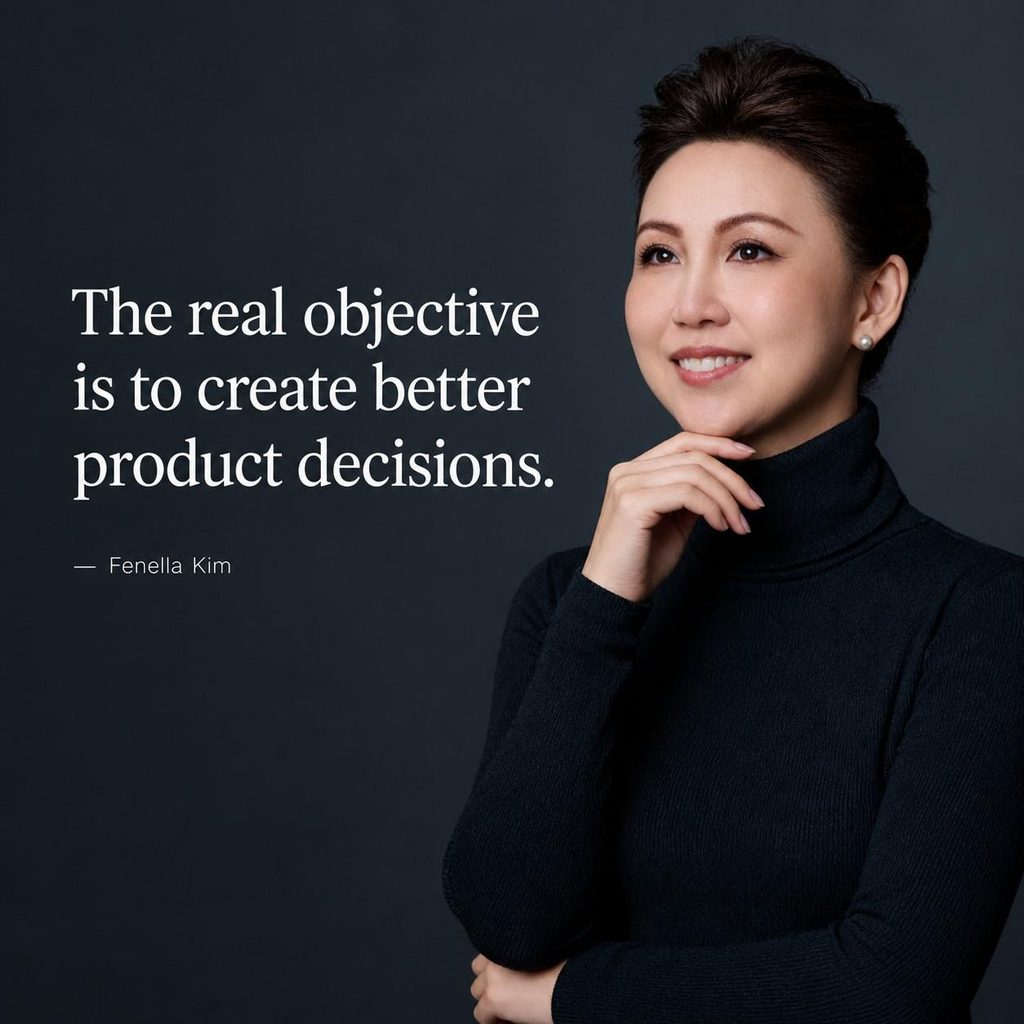
The real objective is to create better product decisions.
That means understanding the customer and clinical problem, establishing strategic priorities, building a disciplined roadmap, aligning technical and commercial teams, recognizing important constraints, and creating an organization capable of executing the strategy.
As the startup grows, the founder’s role must evolve as well.
Product leadership helps determine what the company should build and why.
Executive leadership determines how the organization will align people, resources, and decisions around that direction.
When those two capabilities develop together, a growing MedTech company is better positioned to move from an exciting product idea toward a focused, scalable business.
For CEOs and founders who want additional perspective on the leadership side of growth, Leader Transcend offers confidential CEO coaching, executive coaching, business coaching, leadership development, and CEO peer advisory support led by Fenella Kim.